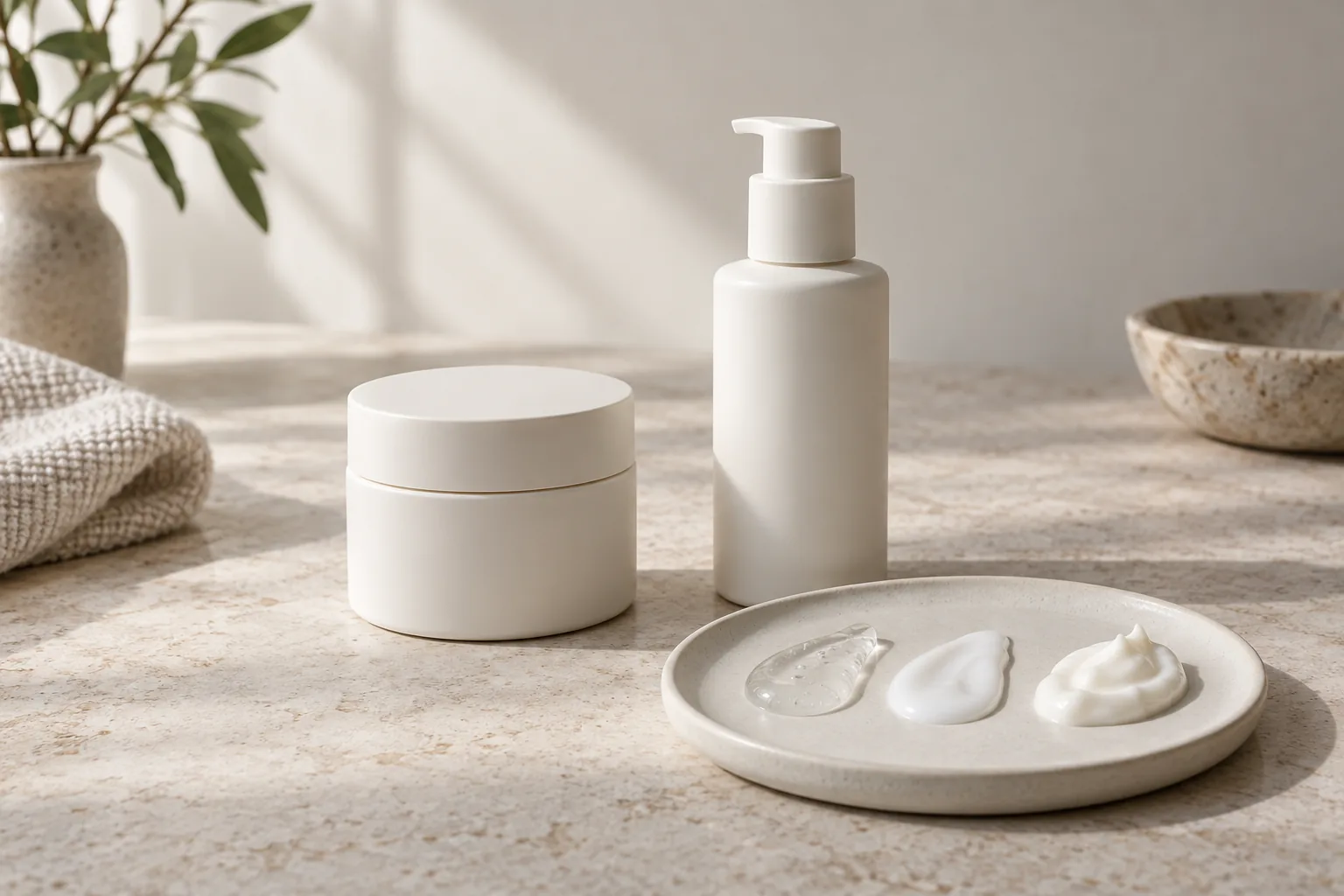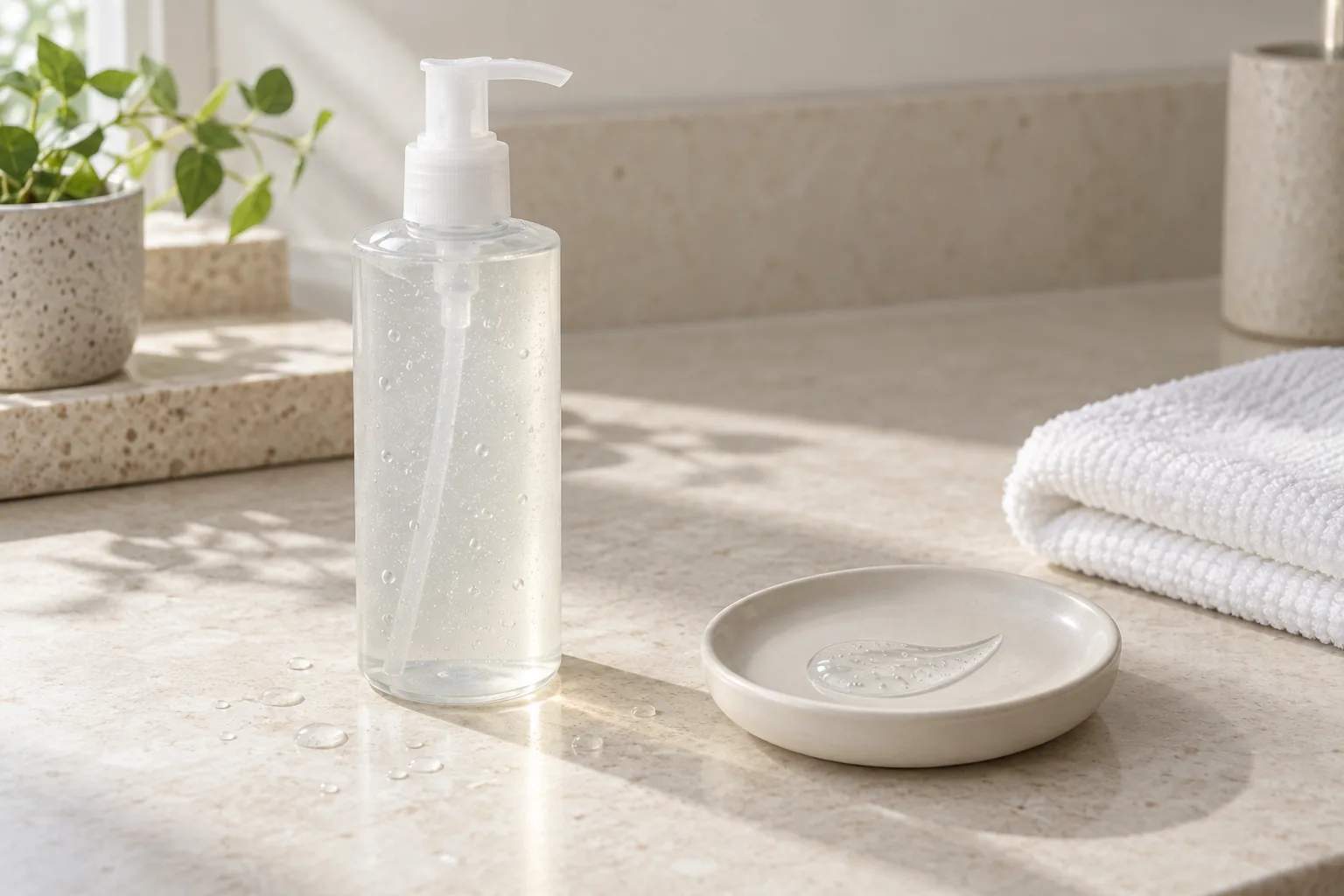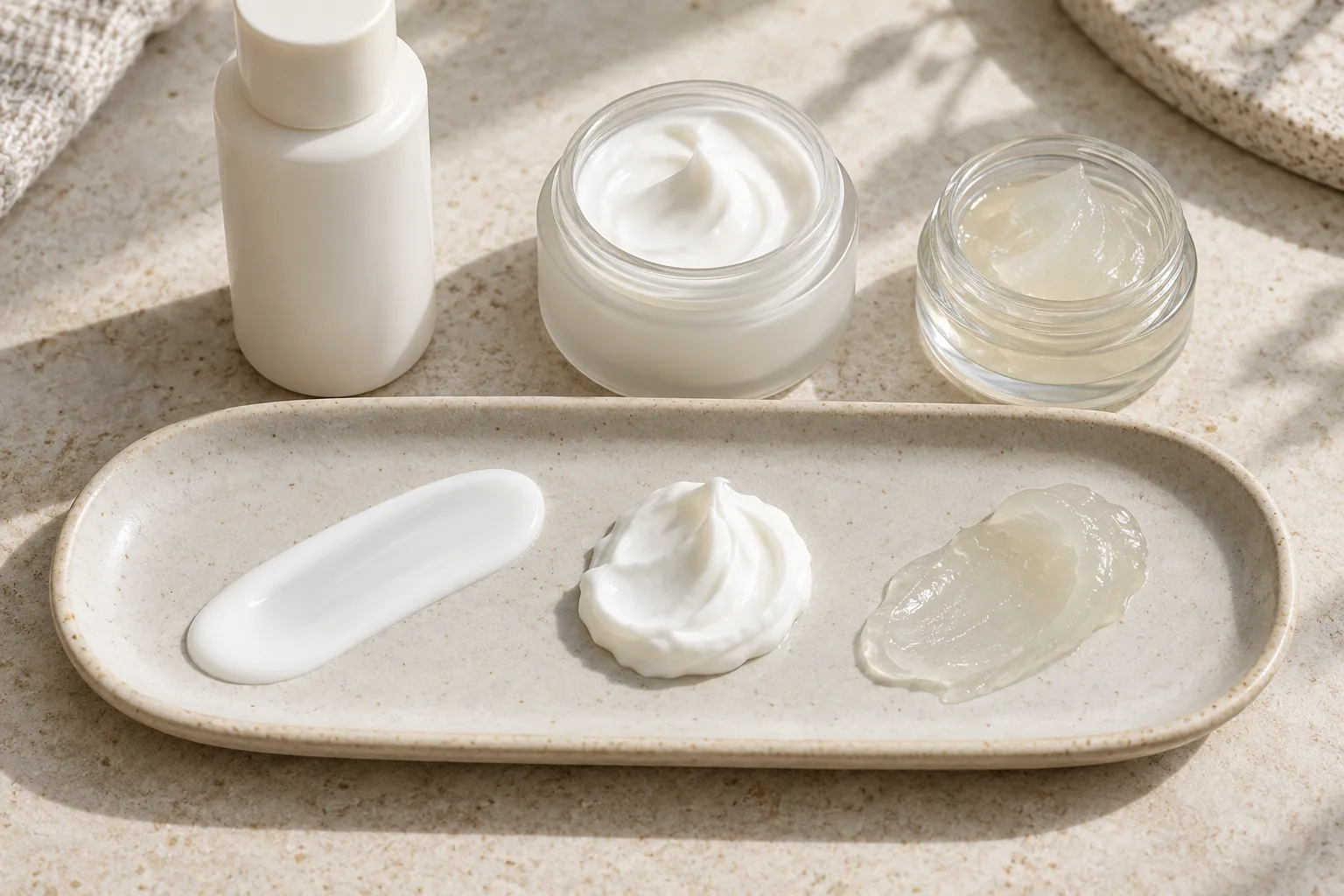
Choose by the tradeoff you need: lotion spreads quickly over a large area, cream adds more staying power without the full weight of an ointment, and ointment provides the strongest surface seal for small or very dry areas. The “best” texture can change between face and hands, summer and winter, or one week of treatment-related dryness and the next.
Texture names are useful, but they are not exact recipes. A rich lotion can overlap with a light cream. A gel ointment may feel different from petrolatum. Compare the finished product after using the category as a first filter.
Compare the practical tradeoffs
| Texture | Spread and feel | Best first trial | Main compromise |
|---|---|---|---|
| Lotion | Fluid, quick to distribute, lighter surface film | Large body areas, mild dryness, frequent daytime use | May not last through severe dryness or repeated washing |
| Cream | Thicker, more cushioned, moderate persistence | Dry face or body, cold weather, localized flaking | Can feel heavy in humid conditions or under multiple layers |
| Ointment | Greasy or balm-like, strongest occlusive film | Cracked-prone hands, lips, small rough patches, overnight use | Transfers easily, traps heat, and may be impractical over broad or hair-bearing areas |
The decision is less “Which texture matches my identity?” and more “How much area must I cover, how much water loss must I slow, and what finish will I actually tolerate?”
Lotion wins when reach and repetition matter
Lotions contain enough fluidity to spread over arms, legs, back, or a hair-bearing area without prolonged rubbing. That makes them practical after a shower or for someone who will reapply during the day only if the product absorbs quickly.
Begin with lotion when dryness is mild, the weather is warm or humid, or a cream makes you skip the step. Apply after bathing while skin is still slightly damp, a timing the American Academy of Dermatology recommends for dry skin.
The limitation is persistence. If shins look ashy again within hours, hands feel tight after every wash, or a treatment has made facial skin visibly flaky, a more substantial cream may do the job with fewer applications. Using six pumps of lotion is not always lighter in practice than one appropriate layer of cream.
Cream is the adaptable middle
Creams generally contain a higher oil proportion and feel thicker than lotions. They balance spread with a more persistent film, which makes them a common choice for dry cheeks, cold-weather body care, and skin made temporarily dry by an active product.
Choose cream when lotion feels pleasant but does not last, or when ointment is too sticky for the area. A cream can work over the whole face, but it can also be placed only where needed: cheeks and around the mouth rather than the center of the forehead, for example.
Richness does not guarantee tolerance. Fragrance, preservatives, or another component may still irritate an individual, and the front-label word “cream” cannot predict clogged pores. Keep the rest of the routine stable when trying a new one.
Ointment is a targeted seal
Ointments have little water and provide the most occlusive finish of the three categories. By slowing water loss from the surface, they can be especially useful on lips, knuckles, cuticles, heels, or a small rough patch. Overnight use may make the heavier finish easier to live with.
That strength creates the compromise. An ointment can transfer to clothing or bedding, feel hot under occlusion, and be difficult to spread over a large or hairy area. It is not automatically the right whole-face moisturizer because skin feels dry once.
Do not apply an ordinary cosmetic ointment over infected-looking, weeping, or unexplained skin and assume the seal is treatment. Pain, drainage, warmth, or a spreading rash needs assessment.
Let the location choose
Face: Lotion or cream usually offers the easiest balance. Choose based on current tightness, climate, sunscreen layering, and whether the product stays comfortable. Add ointment only to a clearly dry small area if appropriate.
Hands: Repeated soap and sanitizer exposure can overwhelm a light lotion. A cream after washing and an ointment at night can divide convenience from sealing.
Arms and legs: A lotion may win because it covers quickly. Move to cream during low humidity or when visible flaking persists.
Lips and small friction points: An ointment format is often the simplest way to maintain a protective surface film. Stop if a flavored or fragranced product repeatedly causes irritation.
Hair-bearing skin: Lighter lotions are often easier to distribute. A heavy ointment may mat hair and reduce adherence even if it is technically more occlusive.
Diagnosed eczema or another skin disease: Follow the treatment plan. AAD guidance for atopic dermatitis commonly favors fragrance-free cream or ointment over lotion, but moisturizer is only one part of disease management and does not replace prescribed care.
Split or layer instead of forcing one winner
Buying three products is not required. Start with the middle option that covers the largest part of your need. Then add a targeted texture only when the first product repeatedly misses.
Examples:
- Lotion over legs, with ointment only on heels.
- Cream over the face, with a tiny amount of ointment on chapped lips.
- Lotion in humid months, the same brand's cream only when indoor heating starts—provided both formulas suit you.
- Cream after handwashing at home, a less messy lotion at work.
Layering can work too: apply lotion or cream, then a small amount of ointment over the driest spot. More occlusion is not always more comfort, so stop at the amount that completes the job.
Judge the next normal interval
A texture fits when the area stays comfortable until the next ordinary application, the product spreads without hard rubbing, and you are willing to repeat it. Move richer when tightness and flaking return too soon. Move lighter or reduce the area when the film remains uncomfortably greasy, interferes with sunscreen, or seems to worsen a pattern of clogged bumps.
Stop using a new product if it causes persistent stinging, itch, swelling, hives, or rash. Seek care for painful cracks, bleeding, signs of infection, widespread symptoms, or dryness that remains uncontrolled despite gentle care.
Lotion, cream, and ointment are tools for different surfaces and moments. Choose enough seal for the job, but enough usability that the product makes it onto the skin.
Common questions
Questions readers often ask
What should I know about compare the practical tradeoffs?
The decision is less “Which texture matches my identity?” and more “How much area must I cover, how much water loss must I slow, and what finish will I actually tolerate?”
What should I know about lotion wins when reach and repetition matter?
Lotions contain enough fluidity to spread over arms, legs, back, or a hair-bearing area without prolonged rubbing. That makes them practical after a shower or for someone who will reapply during the day only if the product absorbs quickly.
Sources