Choose a cleanser by the job it must finish, not by how “deep” it promises to go. A useful face cleanser removes the sunscreen, makeup, sweat, oil, and ordinary soil you actually have at the end of the day, then rinses away without leaving persistent tightness, burning, or itch. More foam, a stronger tingle, and a squeaky finish are not proof of a better clean.
That reframing matters because cleansing is a tradeoff. Surfactants help water lift oil and debris, but the finished formula, the way you use it, and how often you wash all affect how skin feels afterward. The goal is enough removal with the least unnecessary friction.
Start with the load on your face
Before comparing ingredient lists, describe an ordinary day.
Light load: no makeup, a non-water-resistant daily sunscreen, little sweating, and no heavy ointment. One gentle water-rinse cleanser may be enough.
Adherent load: water-resistant sunscreen, long-wear makeup, stage makeup, or a heavy occlusive product. You may need a cleanser designed to dissolve that load, or a separate remover followed by a gentle rinse cleanser. Two steps are an option, not a universal rule. If one product removes everything comfortably, a second cleanse is not automatically more thorough.
Sweat-heavy day: exercise, heat, a helmet, or other occlusive gear. The American Academy of Dermatology advises washing after heavy sweating, but scrubbing is not required. A prompt, gentle wash is different from repeatedly cleansing every time skin feels oily.
This load audit prevents a common mismatch: buying an aggressive cleanser for a light job, then trying to repair the resulting discomfort with more products.
Read the whole cleanser, not one marketing cue
Labels can narrow the field, but no single word settles the choice.
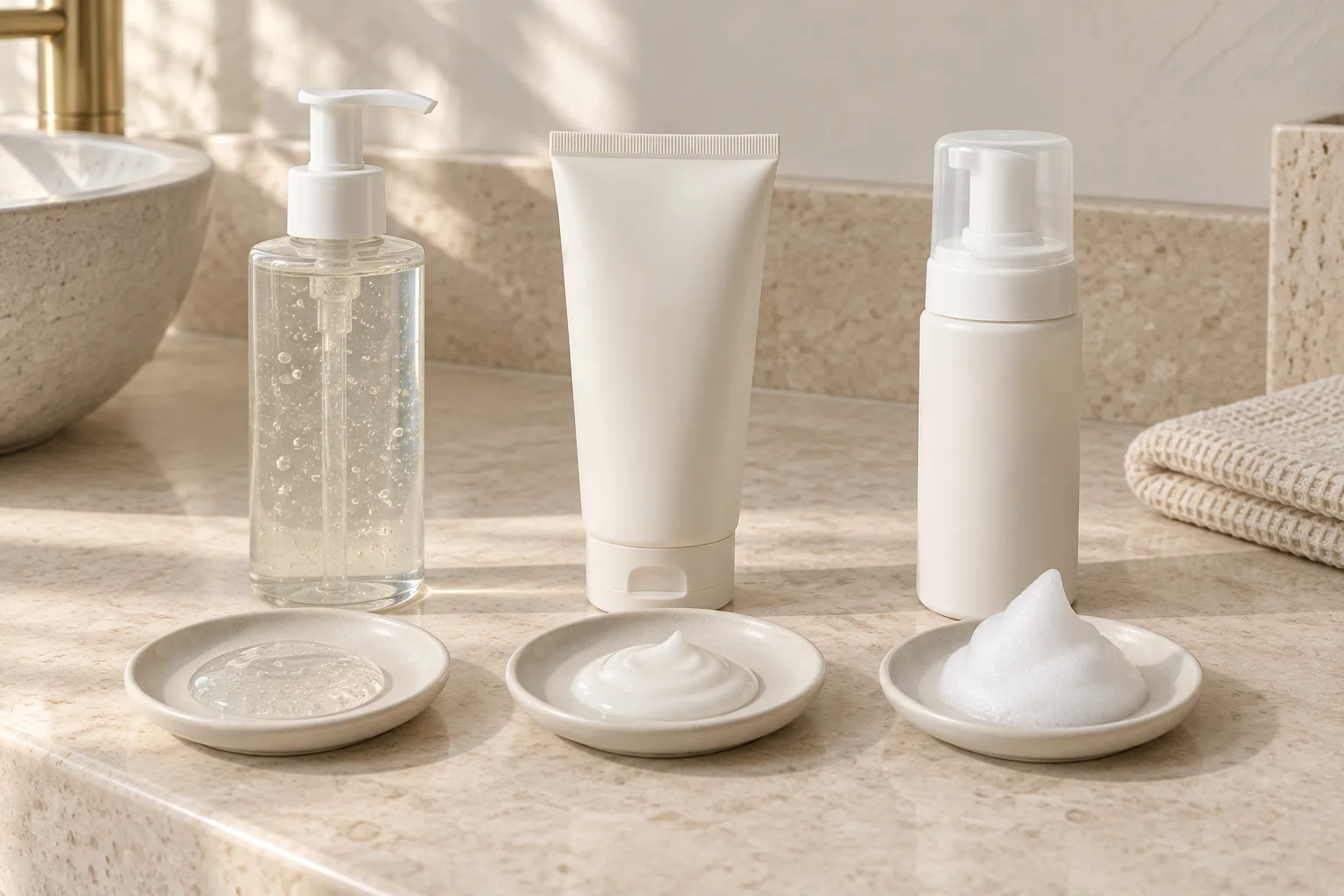
Foam is a format, not a cleanliness meter
A low-foam lotion cleanser can remove a light daily load. A foaming cleanser can also be well formulated and comfortable. What matters is whether the finished product removes your products and rinses clean at the amount and contact time in its directions. Do not keep adding cleanser simply because the lather looks modest.
“Soap-free” and “syndet” are clues, not guarantees
Traditional soap and synthetic detergent, or syndet, cleansers use different chemistry. Reviews generally find syndet systems can be milder than traditional alkaline soap. But a category name cannot predict your experience with every fragrance, preservative, surfactant blend, or cleansing habit. Use it as a screening clue, then judge the actual formula.
A pH number cannot grade the product by itself
Skin-cleansing research describes pH as one part of a larger system. Surfactant type, concentration, ingredient interactions, rinse behavior, and use conditions also matter. A “pH-balanced” claim may be relevant, but it is not a certificate that a cleanser will be non-irritating—or that a product without a printed pH will be harsh.
“Deep clean” does not tell you what was measured
The phrase may describe a sensory effect or a marketing position rather than a standardized daily-face performance target. Look for a concrete intended use instead: removes makeup, removes sunscreen, cleanses oily skin, or is suitable for sensitive skin. Even those claims do not replace your response to the finished product.
If a cleanser claims to treat acne or another disease, check whether it is labeled as a drug and follow its Drug Facts directions. An acne-treatment wash has a different job and risk profile from a plain cosmetic cleanser.
Use a two-part wash check
Test one cleanser while the rest of your routine stays stable. Use lukewarm water, the directed amount, and your fingertips. The AAD advises against scrubbing with a washcloth, sponge, or abrasive tool; friction can add irritation without proving better removal.
Then check two things.
1. Did it remove the intended load?
Look at hairline, jaw, around the nose, and any area where makeup or tinted sunscreen collects. A white towel is not a laboratory test, but repeated visible transfer after a careful wash can signal that the product or method is not handling your load. Eye and lip makeup may need a dedicated remover that is appropriate for those areas.
2. How did skin recover?
Briefly feeling clean is expected. Persistent tightness, stinging, burning, itch, scaling, or redness is not a badge of effectiveness. First make the use gentler: reduce scrubbing, shorten unnecessary massage, use lukewarm rather than hot water, and avoid washing more often than needed. If discomfort continues, try a milder finished formula rather than layering an exfoliant onto the problem.
Moisturizer can help dry-feeling skin, especially when applied after washing, but it should not be used to excuse a cleanser that repeatedly causes pain or a rash.
Change one variable when the cleanser misses
If removal is incomplete but skin is comfortable, change the removal method before escalating everything. A compatible makeup remover or cleansing oil for an adherent product may solve the problem while leaving the second cleanser gentle. Rinse thoroughly and avoid turning the process into prolonged rubbing.
If removal is complete but skin feels persistently stripped, reduce frequency or switch to a milder formula. Washing the face up to twice daily and after sweating is common AAD guidance, not a requirement to cleanse twice when your skin and routine do not need it. Some people may use only water in the morning and cleanse at night; prescribed routines may differ.
If the cleanser leaves a film you dislike, that may be a formula-finish mismatch rather than proof that it failed. Try a product with a different rinse profile instead of using hotter water or a brush.
Know when cleansing is not the main problem
A new cleanser cannot diagnose or cure a persistent facial rash. Stop the suspect product and seek medical advice for swelling, hives, blistering, marked pain, cracking or bleeding, a spreading rash, or symptoms that continue after you simplify. Deep, painful, or scarring acne also needs more than stronger washing; over-cleansing can add irritation without treating the disease.
The best cleanser is not the one that makes skin feel most dramatically changed. It is the one that reliably clears your real daily load, is easy to rinse and repeat, and leaves the rest of your routine with less repair work to do.
Common questions
Questions readers often ask
What should I know about start with the load on your face?
Before comparing ingredient lists, describe an ordinary day.
What should I know about read the whole cleanser, not one marketing cue?
Labels can narrow the field, but no single word settles the choice.
Sources
References used for this guide
- American Academy of Dermatology: Face washing 101
- American Academy of Dermatology: Skin care habits that can worsen acne
- PubMed: The science behind skin care—Cleansers
- PubMed: Skin Cleansing without or with Compromise—Soaps and Syndets
- PubMed: The role of pH in skin cleansing
- FDA: Cosmetics Labeling Claims