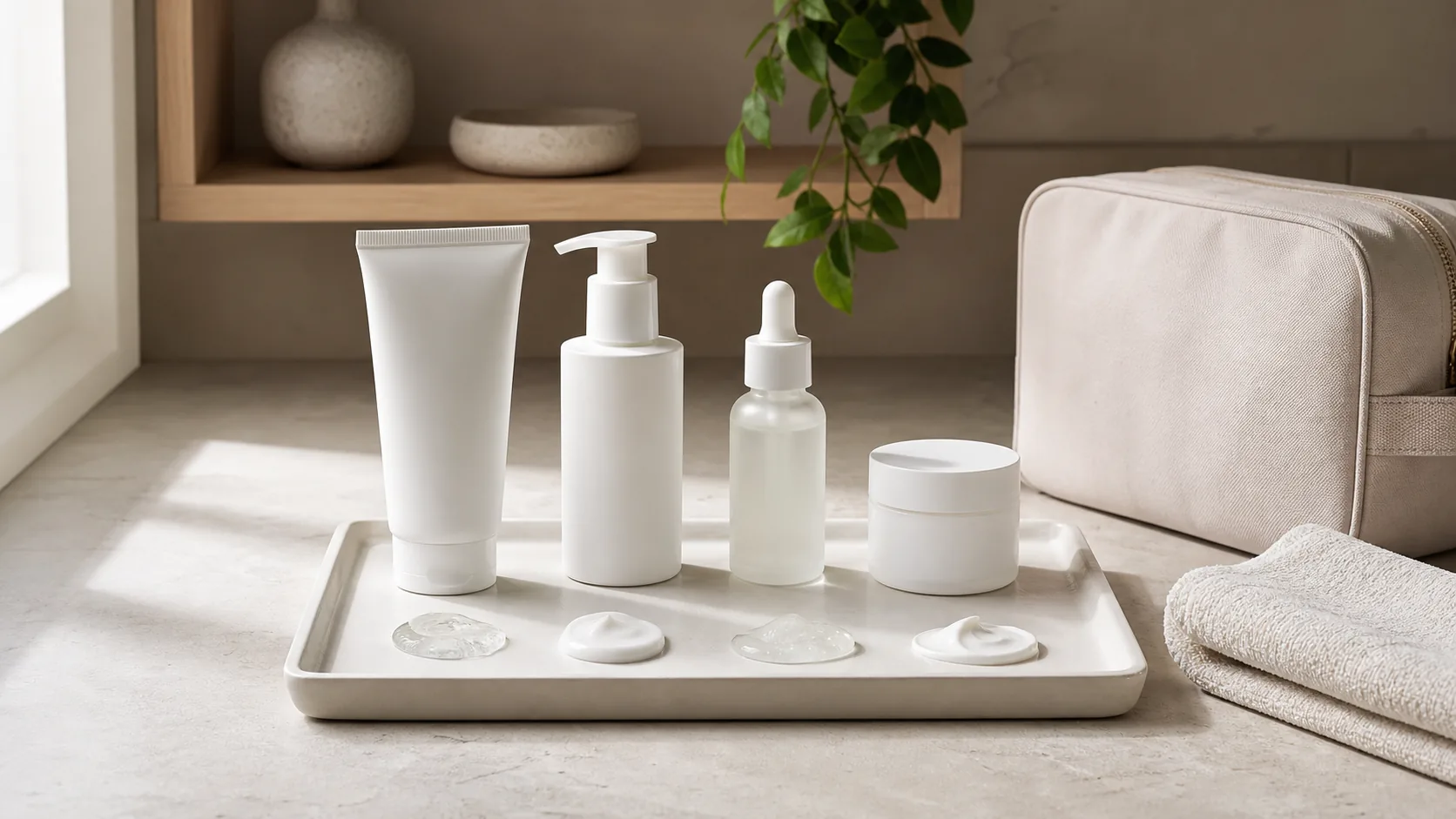
Ten watery layers are not automatically more hydrating than one well-chosen moisturizer. If skin feels tight, looks temporarily crepey, or becomes uncomfortable after cleansing, first reduce avoidable water loss and irritation. Then choose a formula that supplies the jobs your skin needs. An essence can be pleasant and useful, but it must add a function—not merely another layer.
“Dehydrated skin” is a common cosmetic description, not a diagnosis you can confirm from one close-up photograph. Dryness, irritant dermatitis, eczema, weather, over-cleansing, acne treatment, and other factors can create overlapping tightness, flaking, sting, or roughness. The point of a simpler trial is to learn whether ordinary routine changes improve comfort, not to name every symptom at home.
Look for the leak before adding the layer
Hydration can be undermined faster than a serum can replace it. Audit the moments just before the skin feels worst:
- long or hot showers;
- a cleanser that leaves skin tight or squeaky;
- scrubs, exfoliating acids, or retinoids used through visible irritation;
- dry indoor heating or cold, windy weather;
- frequent washing without moisturizer afterward;
- a lightweight product that evaporates without enough water-loss control for current conditions.
AAD guidance for dry skin emphasizes short warm washing, gentle cleansing, patting rather than rubbing, and applying moisturizer while skin is still damp. Those changes may remove the reason you felt compelled to keep layering.
Do not turn “drink more water” into the entire skin-care plan. Hydration status matters to health, but persistent surface dryness is not proof that another glass—or another essence—will correct the skin condition causing it.
Give the formula three possible jobs
Moisturizers often combine several ingredient roles. The useful question is whether the finished formula covers the jobs you need.
Hold water in the outer layer
Humectants attract and retain water in the stratum corneum. Glycerin, hyaluronic acid, and urea are examples, although each finished formula behaves differently. Many essences and serums lean on this job.
A humectant step may feel good under moisturizer. It is not automatically necessary when the moisturizer already contains humectants and leaves skin comfortable.
Smooth gaps and roughness
Emollients soften and smooth the outer surface. They can make rough, flaky skin feel more flexible. Creams and lotions commonly combine this role with humectants and occlusives.
Slow evaporation
Occlusives create a surface barrier that reduces evaporative water loss. Ointments tend to be more occlusive than creams, while gels and lotions usually feel lighter. These are tendencies, not guarantees: the full formula and amount used matter.
If a watery product briefly relieves tightness but the feeling returns as it dries, the missing job may be water-loss control—not a second watery product.
Build the smallest hydration test
Use a stable baseline rather than a ten-product experiment.
- Make cleansing less stripping. Use lukewarm water and a gentle cleanser only where and when needed. Stop brushes, scrubs, or acids that are worsening sting or scale.
- Apply one moisturizer while skin is slightly damp. Choose a texture appropriate to current dryness and climate. A lotion may be enough for mild tightness; a cream or targeted ointment may suit drier areas.
- Keep sunscreen in the daytime. Pick a tolerable product rather than treating sunscreen discomfort as a reason to abandon protection.
- Change one variable. Observe comfort after cleansing, later in the day, and in the environment that usually triggers tightness.
This is not a promise that skin will “reset” on a fixed schedule. It is an attribution method. If the basic plan works, you have evidence that several steps were redundant. If it does not, buying more versions of the same watery layer is unlikely to reveal an underlying condition.
When an essence earns a place
Keep one when it does something the moisturizer does not:
- it improves comfort without stinging;
- it layers cleanly under the moisturizer and sunscreen you actually use;
- the moisturizer alone is too heavy, but the combination lets you use less of it comfortably;
- it delivers a separately chosen active with evidence and directions appropriate to your goal.
Pause it when it duplicates the same humectants, pills under sunscreen, adds fragrance you do not tolerate, or encourages you to skip the moisturizer that was controlling water loss. Product enjoyment is a valid reason to use a cosmetic; it is simply different from a medical necessity.
Know when this is more than a shelf problem
AAD advises dermatology care when dryness persists despite basic measures or becomes painful, cracked, bleeding, very itchy, stinging, or rash-like. Dryness can accompany eczema, psoriasis, medication effects, aging, or systemic conditions. Sudden swelling, blistering, spreading redness, or breathing difficulty needs prompt care.
The useful endpoint is comfortable skin with the fewest products needed to maintain it. That may be cleanser, moisturizer, and sunscreen. It may include one essence because you like the feel or because it fills a real formula gap. It does not require a layer count impressive enough for a video.
Common questions
Questions readers often ask
What should I know about look for the leak before adding the layer?
Hydration can be undermined faster than a serum can replace it. Audit the moments just before the skin feels worst:
What should I know about give the formula three possible jobs?
Moisturizers often combine several ingredient roles. The useful question is whether the finished formula covers the jobs you need.
Sources