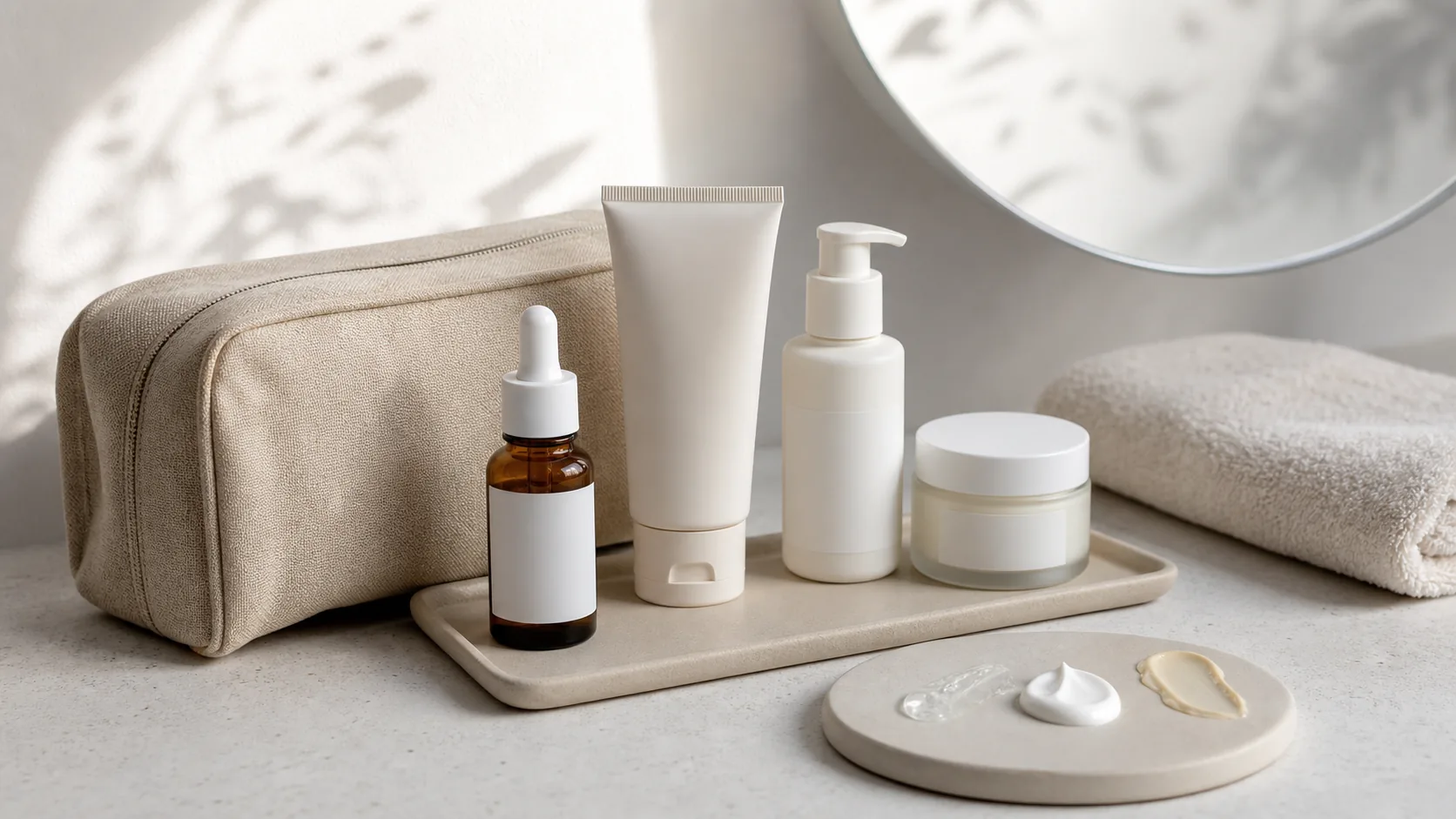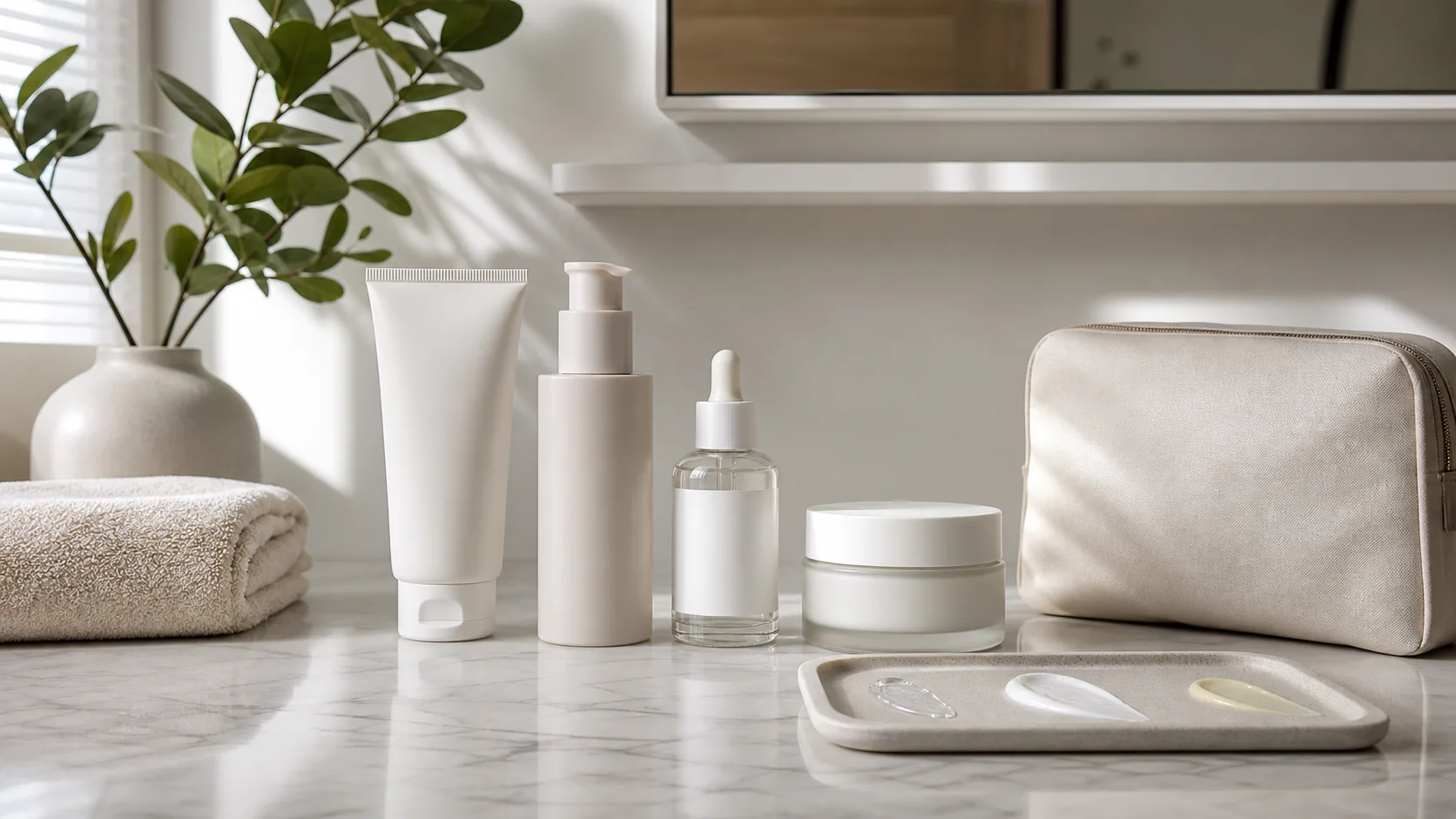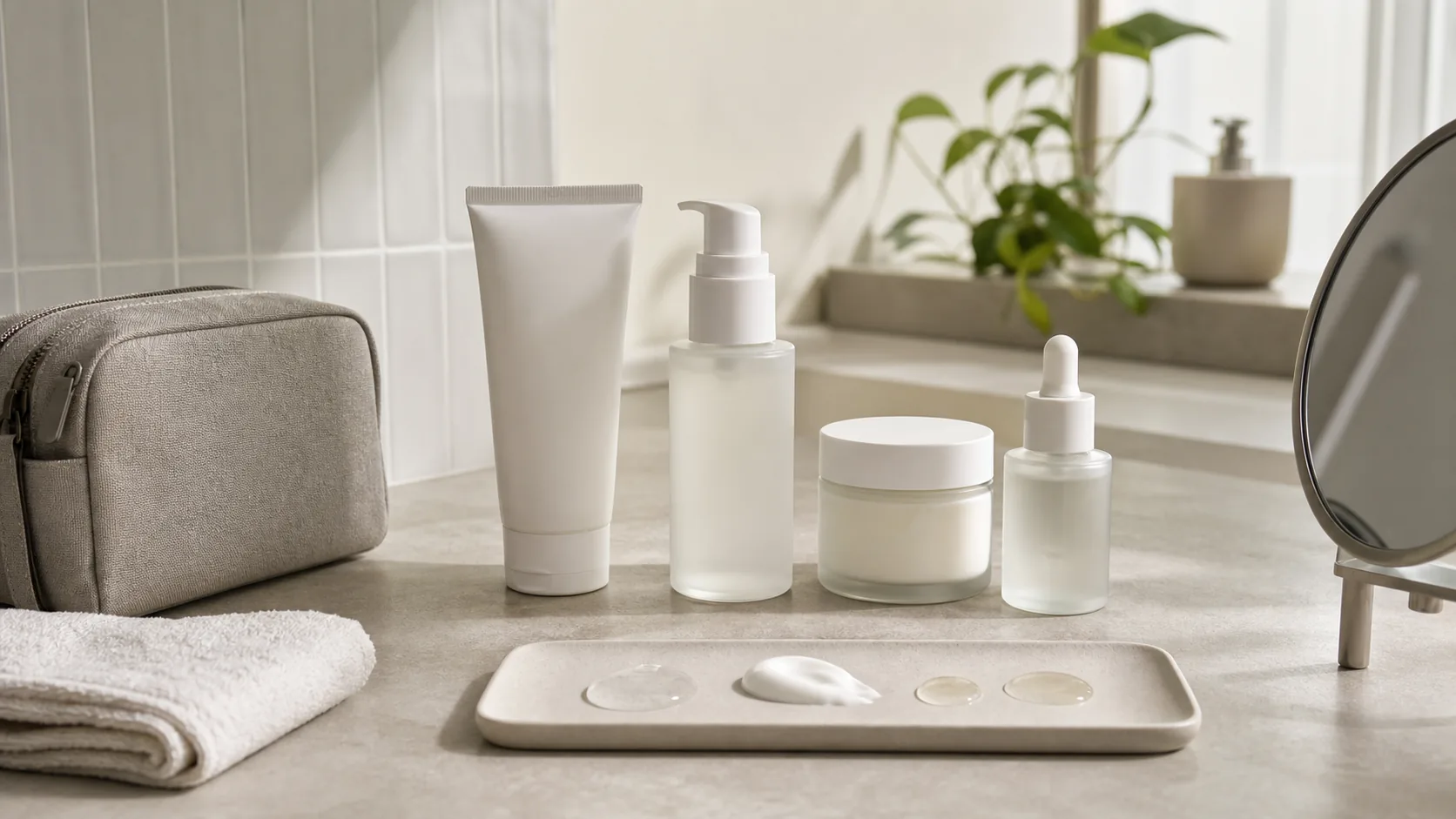
Adult acne is not proof that your face, routine, or lifestyle is insufficiently clean. A pale bathroom shelf, a slick bun, and three matching bottles can be an aesthetic; they are not an acne treatment protocol. A realistic routine may look just as simple, but its logic is different: cleanse gently, support the skin, protect it from the sun, and give one appropriate treatment enough consistent use to judge.
Adults can continue to have acne from adolescence or develop it later. The American Academy of Dermatology lists several possible contributors, including hormonal fluctuations, stress, family history, hair or skin products, medications, and some medical conditions. That list is a reason to avoid moral explanations—not a checklist for diagnosing yourself.
Separate the look of the routine from the work of the routine
Use two columns when you evaluate a “clean” routine:
| Appearance choice | Treatment decision |
|---|---|
| Matching or decanted containers | Keeping Drug Facts and directions readable |
| Dewy finish | Using a moisturizer that supports tolerance without repeatedly clogging your pores |
| No visible makeup | Choosing non-comedogenic makeup and removing it gently when you do wear it |
| Very few products | Including the few jobs your skin actually needs |
| A foamy, squeaky-clean wash | Cleansing without scrubbing or leaving the skin tight and irritated |
The first column can be enjoyable. The second column decides whether the routine can manage acne without creating another problem.
This distinction also prevents a common overcorrection: treating every adult breakout as dirt to remove. AAD recommends gently washing acne-prone skin up to twice daily and after sweating, using fingertips rather than abrasive tools. More washing is not automatically more treatment. Scrubs, harsh toners, and astringents can add irritation while the acne process continues underneath.
Morning: make the routine wearable
The morning does not need to contain the strongest acne step. It needs to leave the skin comfortable enough that you will protect it consistently.
- Cleanse only as needed. If a morning cleanse fits your oil level, exercise, or treatment instructions, use a gentle cleanser. If your skin is dry or easily irritated, a rinse may be enough unless a clinician or product label says otherwise.
- Use moisturizer where it solves a real problem. Acne treatments such as benzoyl peroxide, salicylic acid, and adapalene can be drying. A non-comedogenic moisturizer can make the plan easier to tolerate; oily skin is not automatically disqualified from moisturizer.
- Use sun protection outdoors. AAD recommends broad-spectrum, water-resistant SPF 30 or higher, along with shade and protective clothing. This matters even more when acne leaves dark marks or a treatment increases sun sensitivity.
Makeup is optional, not a hygiene failure. If you wear it, look for non-comedogenic or “won’t clog pores” labeling and remove it without scrubbing. If a product repeatedly seems to coincide with breakouts along the hairline or where it is applied, treat that pattern as useful information rather than proof that all makeup is bad.
Evening: let one treatment own the acne job
At night, remove makeup and sunscreen with the least complicated cleansing method that actually works. Then use the acne treatment according to its label or your prescription plan.
For mild adult acne, AAD patient guidance recommends choosing one nonprescription active that fits the type of acne and using it as directed for six to eight weeks before judging it. That is an evaluation period, not a promise of clear skin. It also is not permission to keep using a product through severe irritation.
The active may be benzoyl peroxide, salicylic acid, adapalene, or another treatment chosen with a clinician. The important point here is not to turn the routine into an ingredient tournament. Start with a named target and a label-led method. Adding a peel, scrub, retinoid, spot treatment, and “detox” mask at once makes both irritation and results harder to interpret.
Moisturizer can sit before or after a treatment when the product instructions or clinician allow it. What matters is that the routine remains tolerable enough to repeat. If the medication has exact application, timing, or combination directions, those instructions outrank a universal layering chart.
Adult acne has checkpoints a bathroom shelf cannot answer
An adult-specific routine should leave room for information that does not fit into a product flat lay.
A change connected to a medicine
Some medicines can contribute to acne-like breakouts. Do not stop a prescribed medicine because of a skincare article or social-media theory. Ask the prescriber whether the timing and pattern could be relevant and what alternatives, if any, are safe.
A cycle, pregnancy, or hormonal transition
Breakouts that recur with menstrual cycles, begin during pregnancy, or change around perimenopause deserve context. The pattern does not prove a hormonal disorder, but it may change which treatments are appropriate. If you are pregnant or trying to conceive, get treatment advice before starting an OTC acne drug; some commonly used options are not appropriate during pregnancy.
Deep, painful, or scarring lesions
Large painful bumps that sit deep in the skin and acne that leaves scars are poor candidates for an endless sequence of cleansers. AAD recommends dermatologic care because store-bought products are unlikely to be enough for these patterns.
A rash that may not be acne
Sudden clusters around the mouth, persistent burning, widespread itch, or a rash after a new product may require a different diagnosis. “Adult acne” is not a safe label for every facial bump.
Judge the system, not the mirror at noon
Choose a small set of observations before the trial begins:
- Are fewer new inflamed lesions appearing?
- Are clogged areas changing gradually?
- Can you use the treatment as directed without repeated interruption?
- Is picking decreasing, or is the routine making you inspect your face more?
- Are dark marks or scars accumulating even if individual pimples settle?
Daily lighting, makeup, menstrual timing, and one inflamed spot can make a routine look as if it is succeeding or failing overnight. Use the treatment's labeled evaluation point. If a six-to-eight-week OTC trial produces no useful change, if irritation blocks consistent use, or if acne is worsening, stop shopping sideways and ask a dermatologist what the pattern requires.
Picking and squeezing are not “deep cleaning.” They can delay healing and increase the chance of scars and post-inflammatory dark marks. A plain hydrocolloid cover may help keep fingers away from a superficial spot, but it does not replace a plan for recurring adult acne.
A realistic routine is allowed to look ordinary
The useful version of minimalism is not a performance of purity. It is a routine with clear jobs and enough evidence to know what to continue:
- gentle cleansing rather than punishment;
- moisturizer when treatment or weather makes it useful;
- sun protection that you will actually wear;
- one appropriate acne treatment used as directed;
- professional assessment when the pattern is deep, scarring, persistent, pregnancy-related, medication-related, or uncertain.
Clear packaging can make a shelf look calm. Clear decision roles make the routine calm.
Common questions
Questions readers often ask
What should I know about separate the look of the routine from the work of the routine?
Use two columns when you evaluate a “clean” routine:
What should I know about morning: make the routine wearable?
The morning does not need to contain the strongest acne step. It needs to leave the skin comfortable enough that you will protect it consistently.
Sources