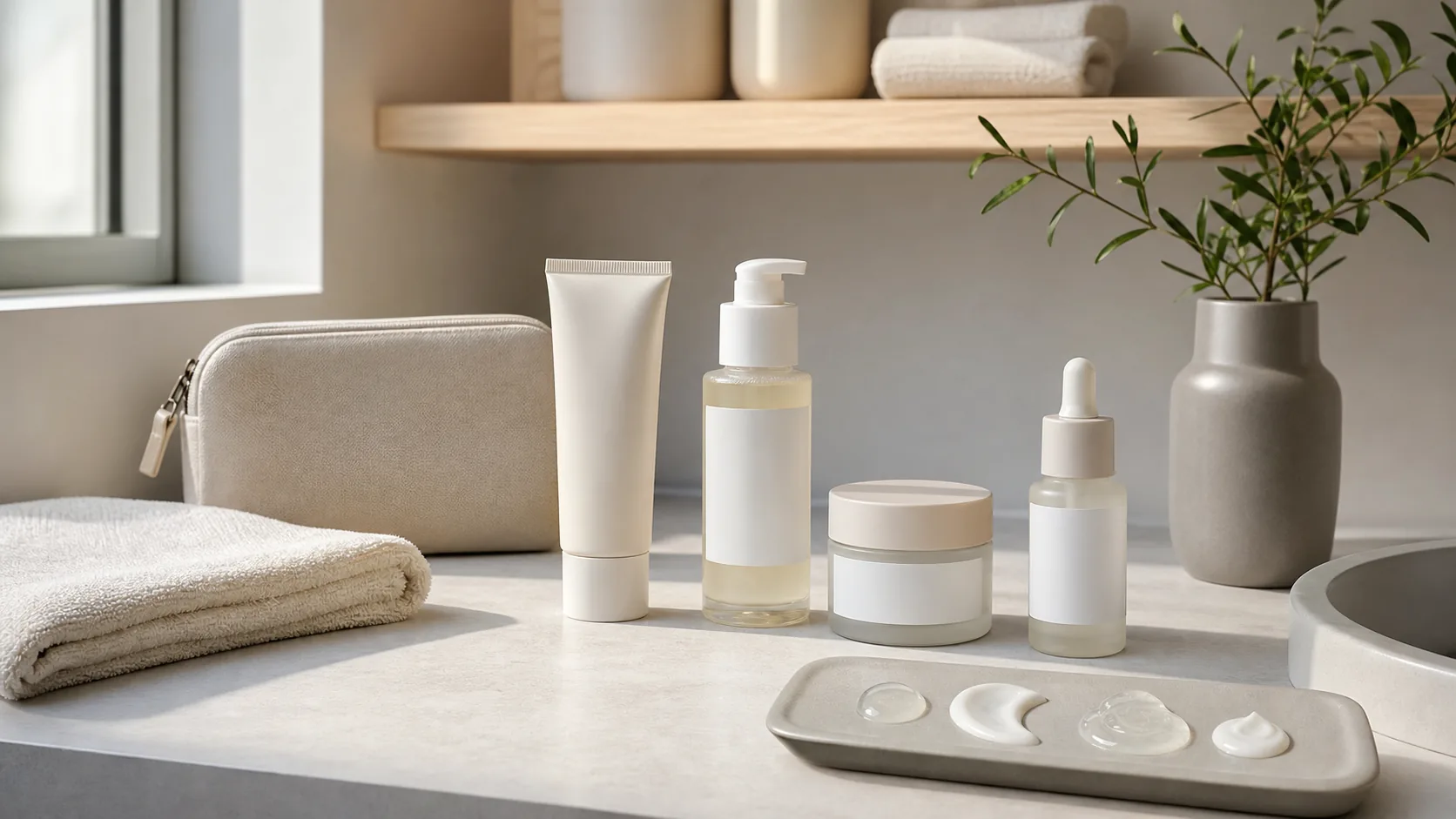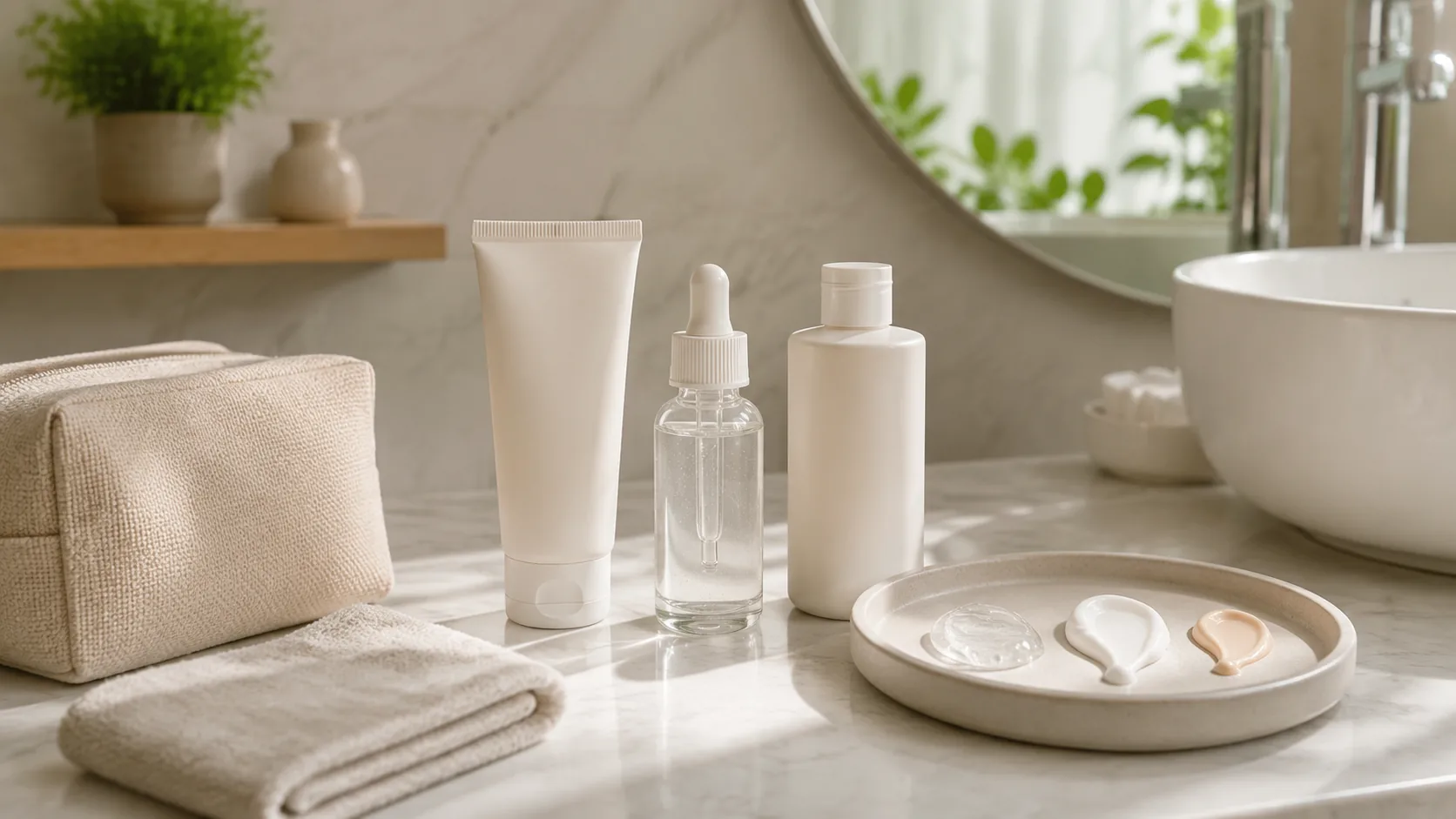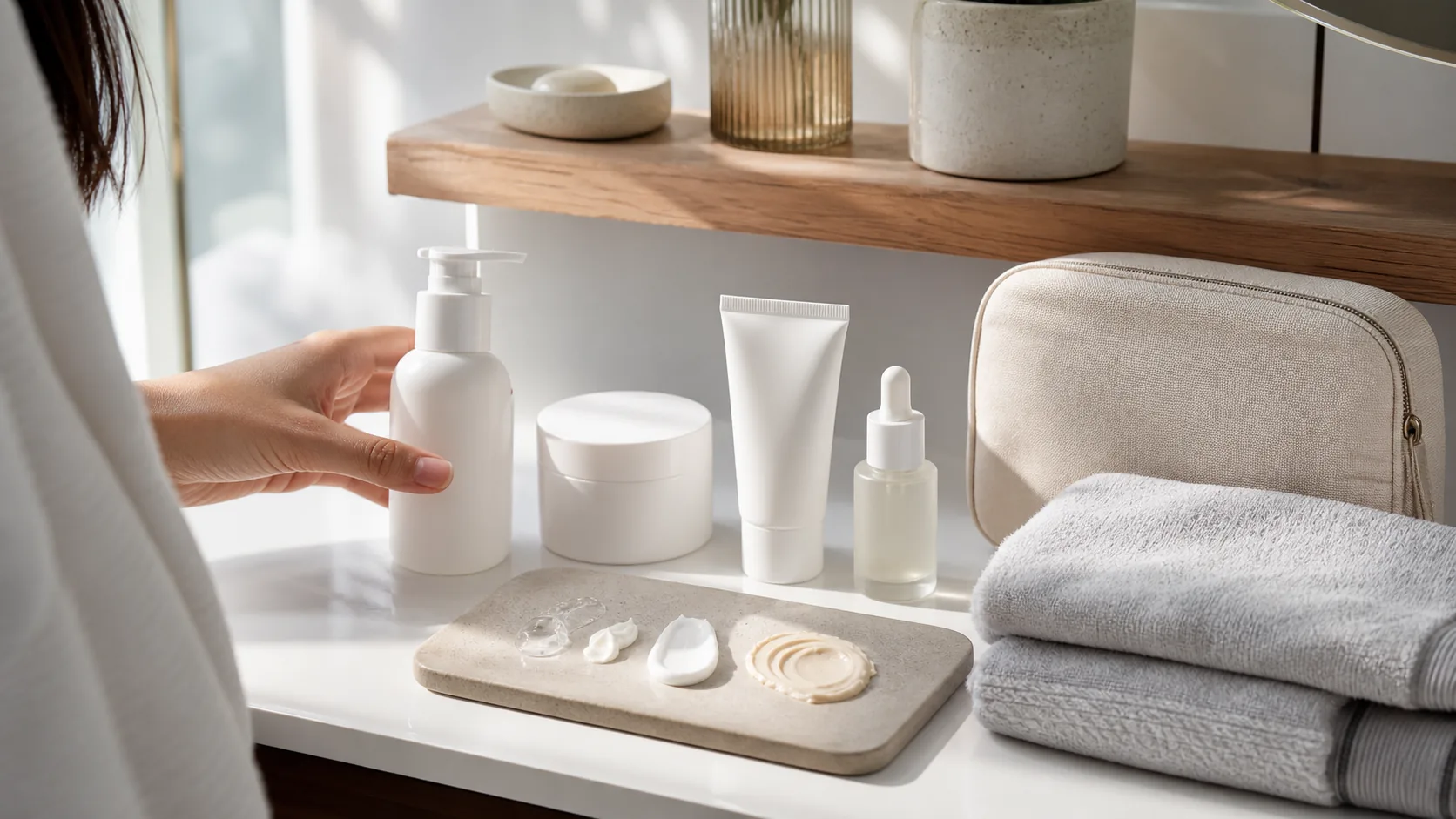
A beginner routine needs three jobs: remove what should not stay on the skin, support comfort and water retention, and protect exposed skin from the sun. Cleanser, moisturizer, and sunscreen are the usual tools for those jobs.
That does not mean using three separate products every morning and every night. You may only need cleanser in the evening. Your sunscreen may already feel moisturizing enough during the day. Some oily areas may not need the same cream as dry areas. The rule is about coverage of essential jobs, not earning points for bottle count.
The AAD describes a simple three-step approach—cleansing, moisturizing, and protecting—as a practical foundation (AAD, skin care on a budget). Start there before deciding that a toner, essence, acid, mask, device, or treatment is missing.
Job one: cleanser removes the day without punishing the skin
A cleanser should remove sunscreen, makeup, excess oil, sweat, and ordinary debris. It should not leave your face feeling squeaky, tight, hot, or raw.
Use lukewarm water and your fingertips. Scrubbing tools and repeated washing can add irritation. The AAD advises limiting face washing to no more than twice daily and after sweating; “twice” is a maximum in this context, not a challenge to reach.
Evening cleansing usually does the most important work because it removes what accumulated during the day. Morning cleansing is more flexible. If you wake up comfortable, a rinse may be enough. If you are oily, sweaty, or using a treatment whose directions call for cleansing, a mild cleanser may make sense. AAD guidance for dry or sensitive younger skin notes that once-daily evening washing may be sufficient, which is a useful reminder that routines can be adjusted rather than copied rigidly (AAD, dermatologist’s guide to skincare).
Choose by result, not by marketing category. A mild gel can work for one person with dry skin; a cream cleanser can feel filmy to someone else. If a cleanser consistently stings or leaves lasting tightness, it is not doing the job gently enough for you.
Job two: moisturizer makes the routine tolerable
Moisturizer helps hold water in the outer skin and can reduce the rough, tight feeling that follows washing, dry weather, or irritating treatments. Applying it while skin is still slightly damp can help trap some of that water.
Texture is the most useful beginner decision:
- Gel or light lotion: often comfortable when skin is oily, humid weather makes creams feel heavy, or sunscreen already provides some emollience.
- Cream: more cushioning for dryness, tightness, or seasonal cold.
- Ointment: the most occlusive option for very dry areas, though it may feel too heavy for an entire face.
You do not have to declare one permanent “skin type” to choose. Pay attention to where and when you need comfort. Combination skin can be treated as different zones: moisturizer on dry areas and less—or none—where the product feels unnecessary. The AAD’s moisturizer guidance emphasizes that there is no single texture for everyone and that season and tolerance matter (AAD, choosing a moisturizer).
Fragrance-free is a useful starting cue for easily irritated skin. “Natural,” “clean,” and “hypoallergenic” are not guarantees. If a moisturizer burns, causes a persistent rash, or makes you avoid the routine, choose a different formula rather than adding another product to compensate.
Job three: SPF protects the skin you are exposing
During daylight exposure, sunscreen is the protective job that cleanser and moisturizer cannot perform. Look for three phrases on the label:
- broad spectrum
- SPF 30 or higher
- water resistant, especially when swimming or sweating
Apply it to exposed skin after other skincare and before makeup. Reapply during ongoing outdoor exposure, especially after swimming or sweating, according to the label. Shade, hats, clothing, and sunglasses remain part of the plan because no sunscreen blocks all UV.
If a sunscreen is moisturizing enough, it can cover two jobs in the morning. If it leaves you tight, use moisturizer underneath. If it pills over your moisturizer, allow layers to settle, use less of the non-sunscreen layer, or find two formulas that cooperate. Do not solve pilling by applying too little sunscreen.
Build the baseline from what you already own
Before buying anything, place your current products into three columns:
| Remove | Support | Protect |
|---|---|---|
| Cleanser or makeup remover | Moisturizer or moisturizing sunscreen | Broad-spectrum SPF 30+ sunscreen |
Keep one tolerable option for each job you actually need. Set aside duplicates and products with unclear roles. Then use the baseline consistently enough to learn how it feels in ordinary life.
There is no universal number of days you must wait before adding another product. The useful checkpoint is functional: the basic routine is comfortable, you can repeat it, and you can name the one concern an extra product would address. If the baseline itself is stinging or causing a rash, adding an active will make the problem harder to interpret.
Make a fourth product earn its place
Ask one question: What specific job is missing?
“Everyone online uses it” is not a job. Neither is “glow.” A defined job might be treating acne, managing a diagnosed condition, or addressing hyperpigmentation. That job may call for an over-the-counter active, a prescription, or professional advice—but it does not change the function of cleanser, moisturizer, and sunscreen.
Add one goal-specific product rather than a new set. Follow its label. Keep the rest of the baseline stable so a reaction or improvement is easier to connect to the change.
When simple is not solving the problem
A basic routine supports skin; it does not diagnose or treat every concern. Persistent acne, painful or scarring lesions, an itchy or recurrent rash, swelling, blisters, cracked or bleeding skin, rapidly changing pigment, or a product reaction that does not settle deserves medical assessment.
The point of a beginner routine is clarity. Cleanser removes. Moisturizer supports comfort. Sunscreen protects during exposure. Once those jobs are covered with products you can actually use, every additional step has to explain why it belongs.
Common questions
Questions readers often ask
What should I know about job one: cleanser removes the day without punishing the skin?
A cleanser should remove sunscreen, makeup, excess oil, sweat, and ordinary debris. It should not leave your face feeling squeaky, tight, hot, or raw.
What should I know about job two: moisturizer makes the routine tolerable?
Moisturizer helps hold water in the outer skin and can reduce the rough, tight feeling that follows washing, dry weather, or irritating treatments. Applying it while skin is still slightly damp can help trap some of that water.
Sources
References used for this guide
- American Academy of Dermatology: Skin care on a budget
- American Academy of Dermatology: A dermatologist’s guide to skincare
- American Academy of Dermatology: How to pick the right moisturizer
- American Academy of Dermatology: How to decode a sunscreen label
- American Academy of Dermatology: Skin care product order